
BLOOD SUGAR ROLLERCOASTER

If you often experience intense cravings followed by energy crashes, or you find yourself routinely snacking not long after eating, your body may be riding a blood sugar rollercoaster.
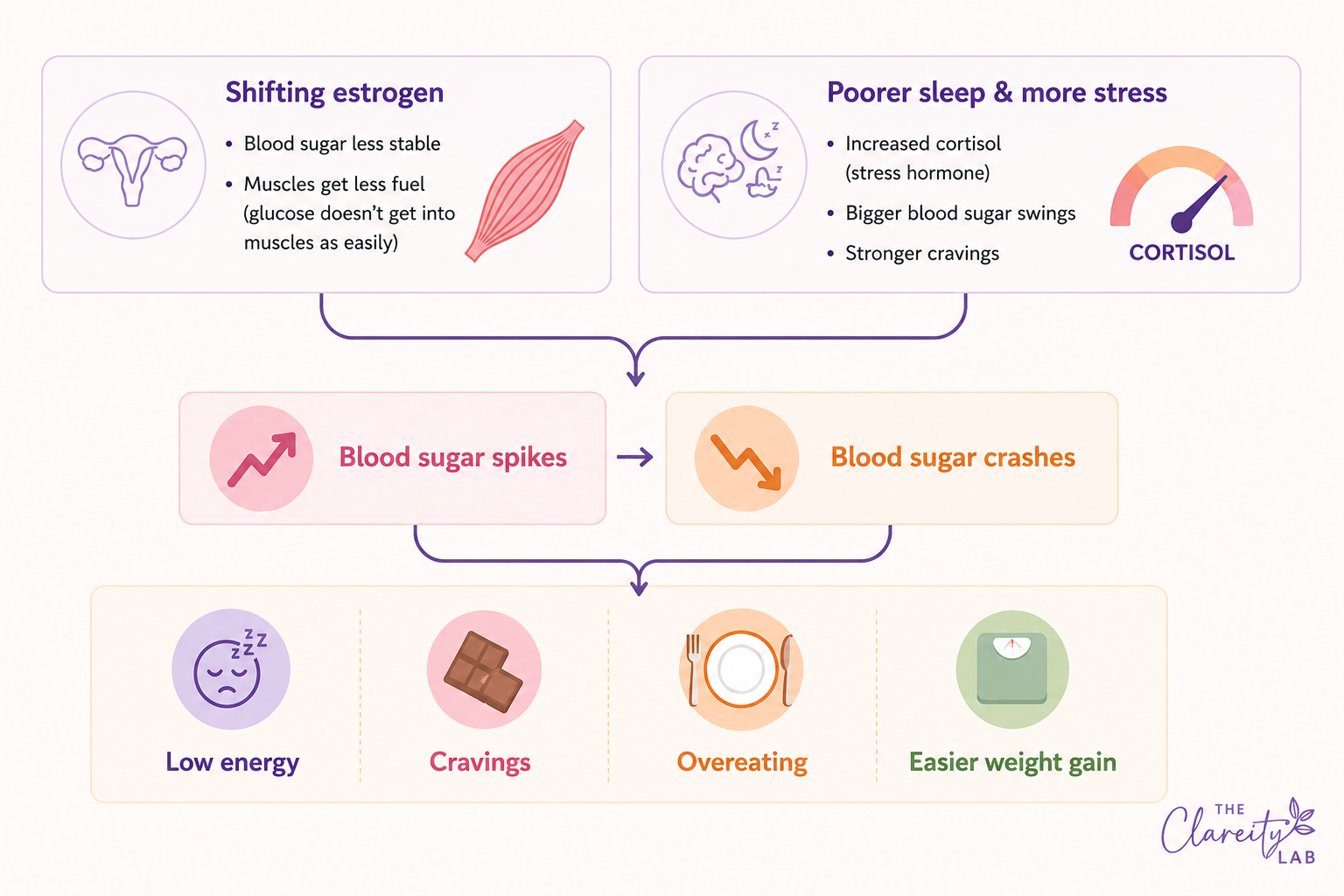
During perimenopause and menopause, changing hormone levels can make your body a little less responsive to insulin, meaning bigger swings in blood sugar happen more easily than they once did. These ups and downs don't just affect your appetite — they can also leave you feeling tired, foggy and frustrated.
The good news is that you don't need to cut out carbohydrates or follow a restrictive diet to steady the ride. Simple nutritional changes and building or maintaining muscle can help your body handle glucose more effectively. As your blood sugar becomes more stable, you will see fewer cravings, more consistent energy and a renewed sense of control around food.
THE SIGNS
I’m hungry again not long after eating.
I become irritable if a meal is delayed.
I feel exhausted after lunch.
I need another coffee to get through the afternoon.
I snack because I’m low on energy rather than truly hungry.
My belly fat seems to be increasing despite my best efforts.
THE SCIENCE
ONE HELPFUL ACTION
Add protein to breakfast
Most women eat very little protein at breakfast, but it's one of the easiest ways to keep your blood sugar on a steadier course. Protein slows the digestion of your meal, helping reduce the blood sugar spike after eating. It also keeps you feeling fuller for longer, so you're less likely to be hunting for snacks by mid-morning.
This week, aim for 15–20 g of protein at breakfast. Try two eggs with wholegrain toast, a cup of high-protein Greek yogurt with berries, or a protein smoothie. It's a small change that can help you feel fuller, experience steadier energy, and reduce cravings before lunch.
~ Small actions, big changes
~ Power in simple habits
~ All it takes is one step
~ Small actions, big changes ~ Power in simple habits ~ All it takes is one step
LET’S GET STARTED